News
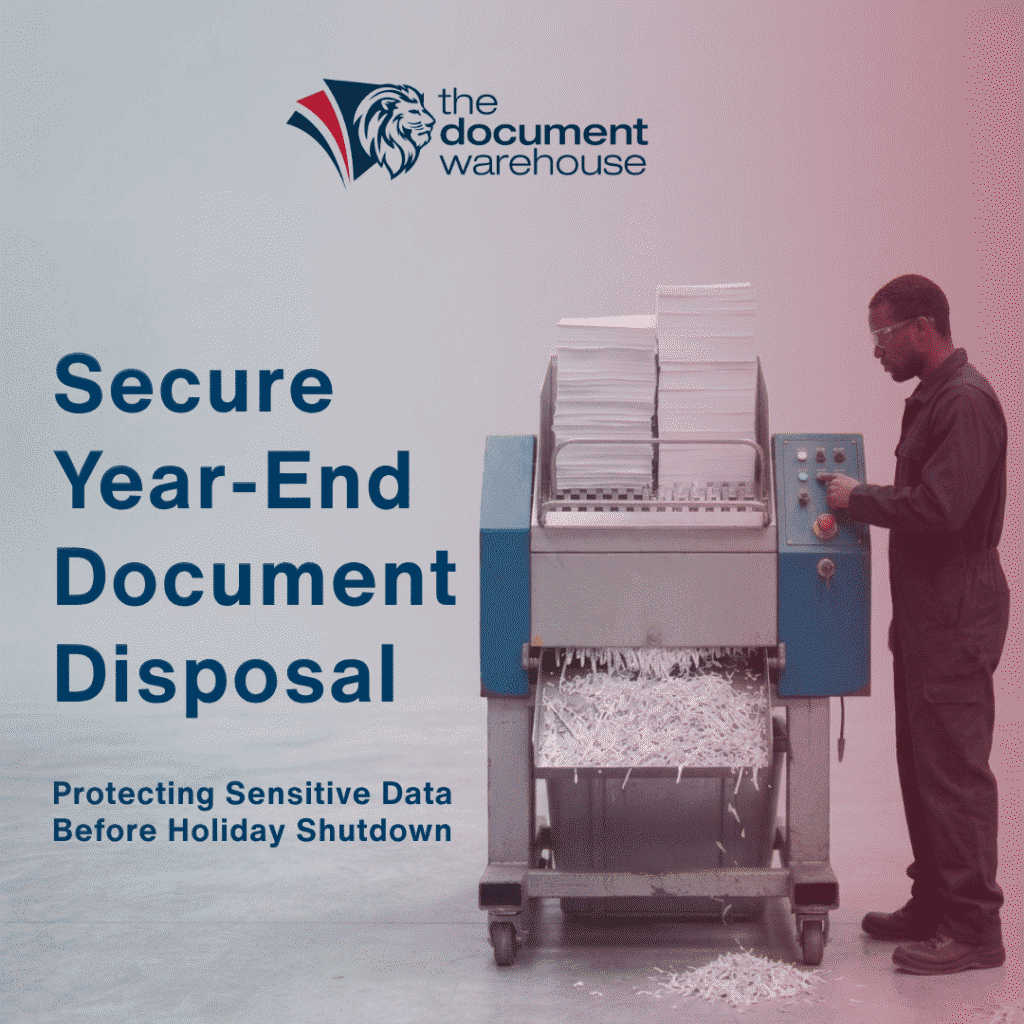
Secure Year-End Document Disposal
Nov
Protecting Sensitive Data Before Holiday Shutdown
The December break is a useful opportunity to clear desks, review filing cabinets and prepare for the year ahead. But a year-end clear-out should begin with a retention review, not a shredding bin. Deciding what to keep, approving what can be destroyed, and arranging secure disposal help businesses manage confidential records responsibly.
Understand how secure disposal supports POPIA
Under Section 14 of POPIA, personal information records, regardless of format, must not be retained longer than necessary to achieve their original purpose.
Retention is only permitted if:
- Required or authorised by law.
- Reasonably required for lawful business functions.
- Required by a contract between the parties.
- Consented to by the data subject.
When no longer authorised, records must be destroyed, deleted, or de-identified as soon as reasonably practicable, using a method that permanently prevents reconstruction in an intelligible form. Businesses remain legally liable as the responsible party and must ensure any third-party shredding service complies contractually as an operator.
Review retention requirements before sorting
Avoid applying one retention period to every file. Financial, employment, contractual and sector-specific records may have different requirements. Check your retention schedule, relevant dates and reasons for keeping each record category.
Ask departments to identify documents needed for ongoing audits, disputes, investigations or unresolved queries. If requirements are unclear, involve your Information Officer and relevant legal or compliance adviser before approving destruction.
A closed account or completed project is a reason to review its records, not an automatic instruction to discard them. Similarly, scanning a document does not automatically remove the need to retain its original.
Identify what can be destroyed
Use three clearly labelled groups to make the review easier:
- Keep or archive records still needed for operations, retention requirements or unresolved matters.
- Review documents with uncertain ownership, dates or disposal eligibility.
- Approved-for-destruction records that have been checked and authorised for secure disposal.
If you have duplicate printouts, old drafts, or outdated reports, check if they can be securely disposed of after confirming their purpose and retention needs. Choose a department representative to approve the disposal. Make sure to record the document type, date range, batch reference, and approval details.
Protect documents while they await disposal
Confidential paperwork still needs protection after disposal has been approved. Keep it in suitable secure containers or a locked holding area, with access limited to authorised staff. Avoid open recycling bins, shared corridors and unattended loading areas.
Separate approved material from records awaiting review. Before closing, check printer trays, meeting rooms and temporary workspaces for overlooked paperwork, and tell staff where confidential documents should go.
Arrange Secure Disposal Before Closing
Under POPIA Sections 14(4) and 14(5), organisations must irreversibly destroy or de-identify personal information as soon as authorisation expires to prevent any reconstruction.
Before closing a project or account, ensure compliance through our secure, end-to-end destruction workflow:
- Collection & Custody
- Records are placed in sealed, trackable security containers and transported via monitored vehicles to maintain a strict chain of custody.
- Industrial Shredding
- Materials are processed using cross-cut industrial shredders, rendering the data irrecoverable before recycling.
- Certificate of Destruction
- Once processed, you receive a legal Certificate of Destruction to serve as your audit trail for POPIA compliance and corporate governance.
Your year-end disposal checklist
- Check retention requirements and unresolved matters.
- Approve and record documents selected for destruction.
- Store confidential paper securely until handover.
- Confirm collection or delivery arrangements before closing.
- Assign someone to receive and file the destruction certificate.
Preparing for a year-end clear-out? Speak to The Document Warehouse about secure offsite shredding and document collection arrangements. Share your location, approximate volume and preferred timing to discuss your requirements and request a quotation.
Enquire about secure document shredding