


News
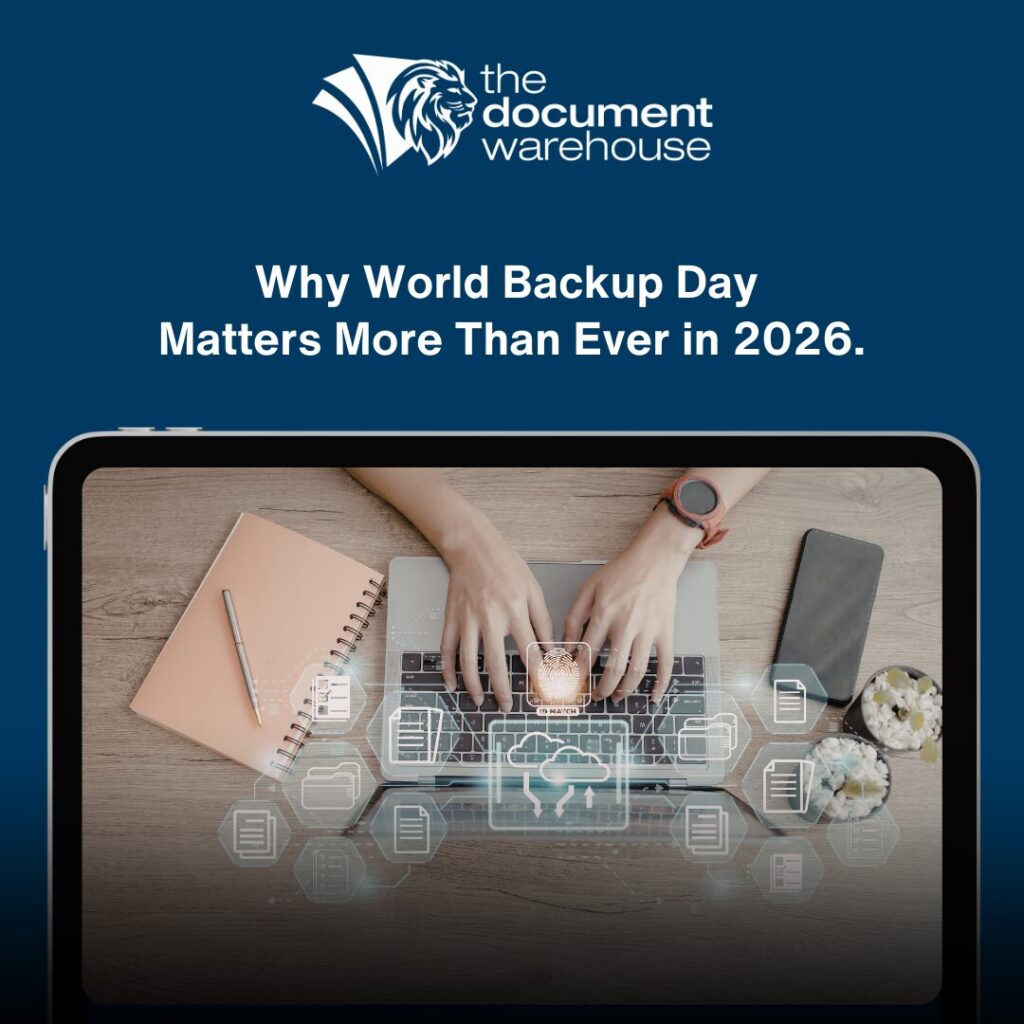
Why World Backup Day Matters More Than Ever in 2026.
Mar
How modern data risks have turned backup into a board-level priority.
Cyber risk no longer begins with hackers. It begins with information mismanagement.
Across South Africa, organisations face increasing regulatory pressure, more sophisticated ransomware, and greater operational disruption risk. Yet many businesses still treat data backup as a technical IT task rather than a governance responsibility.
As World Backup Day approaches (31 March), it is worth asking:
Is your backup strategy resilient or reactive?
The South African Risk Landscape Has Changed
The risk environment has intensified significantly. Organisations are navigating:
- Ransomware attacks are targeting small and medium-sized businesses.
- Regulatory penalties for poor information management and privacy non-compliance (including POPIA).
- Supply chain disruption is affecting data access.
- Insider exposure and human error.
- Hardware and infrastructure failure.
A weak backup strategy does not just cost time; it also costs money. It can trigger compliance breaches, reputational damage, operational downtime, and direct financial loss.
Backup failure is no longer an inconvenience. It is a governance failure.
From an IT Function to an Executive Responsibility
Backup has shifted from server rooms to boardrooms. Executives and boards are increasingly accountable for:
- Data retention compliance.
- Disaster recovery capability.
- Business continuity planning.
- Secure off-site storage.
- Encryption standards and access control.
- Tested recovery protocols.
The question is no longer whether backups exist. The question is whether they are governed, documented, and recoverable.
A backup that cannot be restored within defined timeframes is not a backup. It is a liability.
Common Misconceptions That Create Exposure
Many organisations believe they are protected because:
- “We use cloud storage.”
- “Our IT provider manages backups.”
- “We’ve never experienced a breach.”
However, common vulnerabilities include:
- No documented recovery testing.
- Backup data is stored in the same physical location as production systems.
- Unencrypted legacy drives or tapes.
- No version control.
- No audit trail of backup and restoration processes.
- No clear retention schedule for backup media.
Cloud storage alone does not equal resilience. Governance requires structure, testing, and accountability.
What a Modern Backup Strategy Should Include
A governance-aligned backup strategy should incorporate:
- Secure off-site vault storage.
- Encrypted backup media.
- Cloud redundancy where appropriate.
- Documented retention schedules.
- POPIA-aligned data protection controls.
- Regular, tested recovery simulations.
- Clear reporting to executive leadership.
Backup must be integrated into a broader information governance framework, not treated as an isolated IT function.
The Business Case for Governance-Led Backup
Effective backup strategy:
- Protects revenue continuity.
- Safeguards customer trust.
- Preserves leadership credibility.
- Reduces regulatory exposure.
- Strengthens audit readiness.
In 2026, backup is not an operational checkbox. It is a governance obligation tied directly to compliance, continuity, and corporate accountability.World Backup Day is not a reminder to copy files. It is a reminder to strengthen resilience. Learn more at www.tdw.co.za